By Mt Hope Chiropractic and Wellness | Rochester and Penfield, NY | Serving Greater Rochester | Article Review by: Dr. Robert DeNero
Most people who finally book their first chiropractic visit have been thinking about it for a while. Maybe something flared up and went away and came back. Maybe you’ve tried a few things and they helped temporarily but nothing stuck. Maybe you’re just curious whether chiropractic could help with something you’ve been living with longer than you’d like to admit.
Whatever brought you here, the uncertainty of walking into a new provider’s office for the first time is real. This article exists to reduce that uncertainty with the hope that by knowing exactly what to expect before you walk through our door, you can find some ease.
Before You Arrive
We’ll send you intake forms before your appointment so you’re not filling out paperwork in the waiting room. Take your time with them. The more clearly you can describe your history, including details around when it started, what makes it better or worse, what you’ve already tried, the better we can prepare for your first chiropractic visit.
Wear comfortable clothing you can move in. Your provider will be looking at how you move as a whole, not just where it hurts.
If you have any previous imaging, like X-rays, MRIs, prior diagnoses, bring those along. They’re helpful context, but not always required.
Your Assessment: What We’re Actually Looking For
Your first chiropractic visit is primarily about understanding you. Not just where it hurts, but the why underneath.
Most providers start with symptoms. We like to start with movement. Your provider will look at your posture, your range of motion, and how your whole system moves because the place that hurts is often not where the problem actually started.
This is what we call a compensation pattern. If your neck can’t rotate fully, your body finds a workaround, like maybe you turn your whole torso to check your blind spot while driving. Do that for years and eventually your low back and hips start absorbing a load they were never designed to carry. The pain shows up there despite the problem starting in your neck.
Finding where the chain broke is the whole point of the first assessment. We set a baseline here by understanding your range of motion, your movement patterns, what’s restricted and where. Then, we have something concrete to measure your progress against from visit one.
What Your Provider Will Tell You
Before you leave your first chiropractic visit, you’ll have a clear picture of what we found, what we think is going on and why, a realistic timeline for recovery, and a recommended treatment plan.
We don’t believe in keeping people guessing. If we can help you, we’ll tell you how and for how long. If we think something else is going on that we’re not the right fit for, we’ll tell you that too.
What Treatment on the First Visit Might Look Like
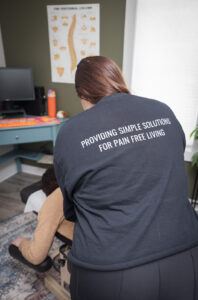
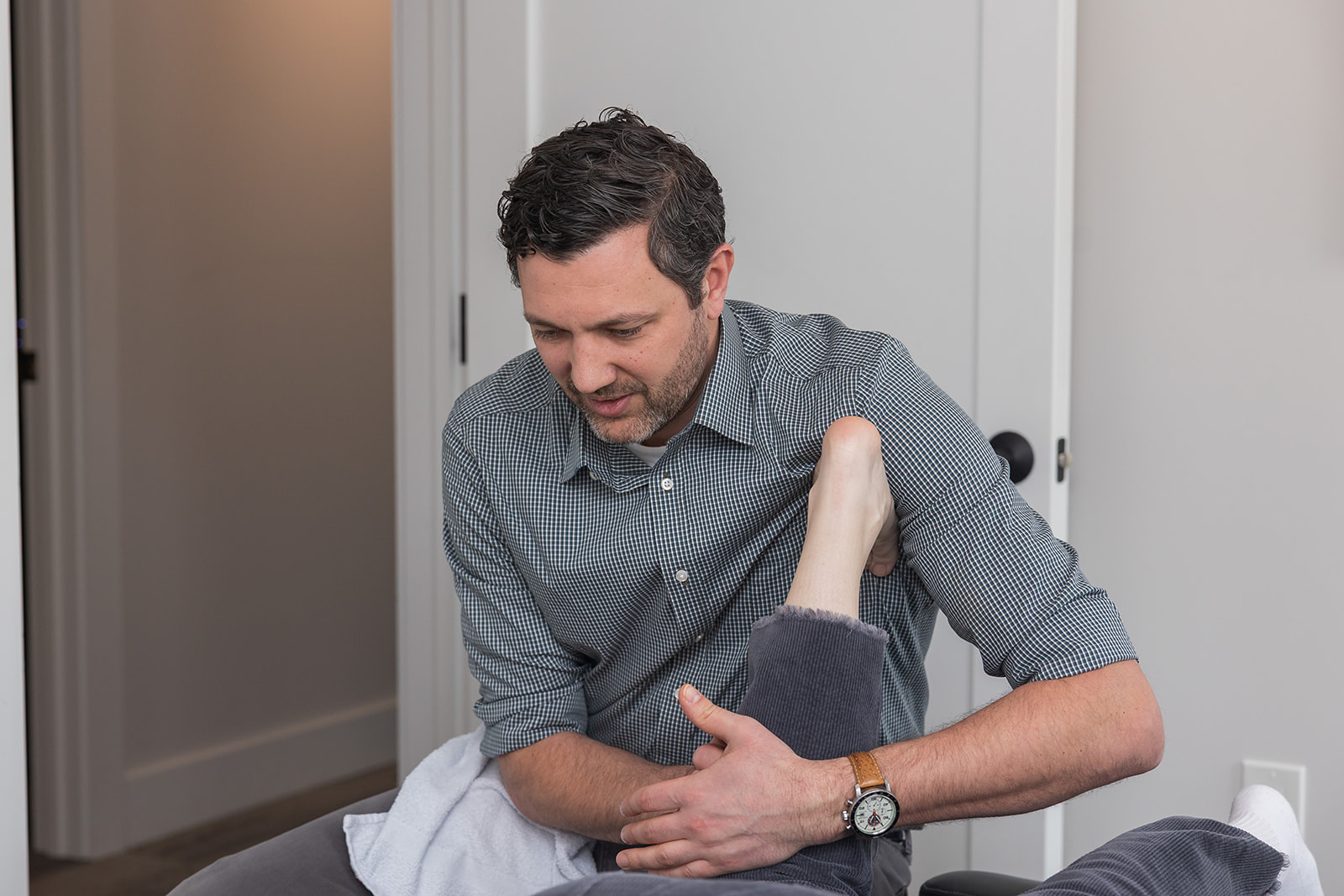
Most patients receive hands-on work at the first visit, but some don’t. It depends entirely on what the assessment shows.
When we do work on the first visit, the goal is to restore joint mobility. This is the most hands-on phase of care and the one you genuinely cannot do for yourself. Stretching and foam rolling work on muscles, but if the underlying joint restriction is still there, the muscle will keep getting the same signal to stay tight. The moment the joint gets moving, the surrounding muscle often releases immediately. Patients are consistently surprised by how quickly that happens.
You are in control throughout. If a technique feels uncomfortable or you’re not sure about something, tell us so we can adjust.
What to Expect After Your First Visit
Some mild soreness in the hours after your first chiropractic visit is normal, similar to how muscles feel after exercise. It’s a sign your body is responding, not a sign something went wrong. It typically passes within a day or two.
A few things that help in the first 24-48 hours:
- Move gently. Rest feels safer when something hurts, but gentle movement is almost always better than stillness. It keeps circulation going and signals to your nervous system that it’s safe to start recovering.
- Drink water. This supports the tissue changes happening after treatment.
- Notice how you feel. The 24-48 hours after a visit are a window of opportunity. Your body is more receptive to change and small habits in this window compound faster than at other times.
What Comes Next: Our Three Phase Framework
Recovery happens in three phases, and they often overlap.
Phase 1: Move it. Restoring range of motion. This is the hands-on work of adjustments, trigger point therapy, joint mobilization. The goal is to get the body moving freely again before we build on top of that.
Phase 2: Control it. Once you can move, you need to be able to control that movement. This is where coordination work comes in. We’ll show you exercises that retrain the brain and body to communicate properly. This is the most commonly skipped step in pain management and the one most responsible for relapses.
Phase 3: Strengthen it. Only once you can move and control the movement does it make sense to build strength. This is where lasting results come from. This phase looks less like treatment and more like helping you’re getting back to the activities you actually want to do.
Frequently Asked Questions
- Do I need a referral to see a chiropractor in New York?
No. In New York State you can see a chiropractor directly without a physician referral. - Do you accept insurance?
We accept most major insurance plans. Because coverage varies, we recommend calling before your first visit to confirm your specific benefits. Rochester: (585) 445-8584 | Penfield: (585) 445-8605 - How many visits will I need?
It depends on what’s going on and how long it has been building. Most patients notice meaningful improvement within the first few visits. At your first appointment we’ll give you a realistic timeline based on your specific situation. - Will it hurt?
The vast majority of what we do is gentle. Some patients feel mild soreness after their first visit, similar to how muscles feel after a workout. Most people leave their first visit surprised by how they feel. - Do I have to keep coming forever?
No. Our goal is to get you better as efficiently as possible and then transition you to a maintenance schedule that fits your life or discharge you entirely if that’s what makes sense. Our patients stay because they want to, not because we keep them dependent.
When You’re Ready
A first visit at Mt Hope isn’t a commitment. It’s a conversation. You’ll leave with more clarity about what’s going on in your body and a plan if you decide you want one.
We offer free consultations at both locations with no cost, no pressure, just a chance to talk through what’s going on before you decide anything.
Rochester: 1174 Mt Hope Ave | (585) 445-8584
Penfield: 1801 Penfield Rd | (585) 445-8605